BS in Environmental Engineering
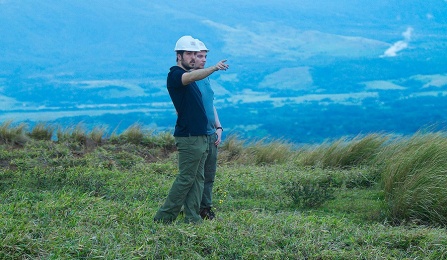
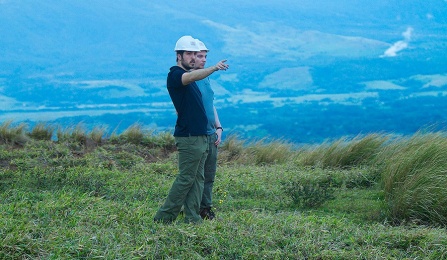
Environmental engineers work at the interface of society and the natural world to protect human health and the integrity of ecosystems. Top priorities include delivering safe drinking water, improving air quality, managing materials and waste, preventing and treating pollution, mitigating climate change and restoring the Great Lakes and natural water systems.
Environmental engineers promote the values, principles and practices of green and sustainable development. Interdisciplinary training that integrates environmental science, engineering and policy puts environmental engineers in the unique position to address traditional concerns of water and sanitation as well as emerging global issues of environmental sustainability and energy.
Contact the CSEE Undergraduate Office (Environmental)
Director of Undergraduate Studies, Environmental Engineering
Dr. Ning Dai
231 Jarvis Hall
ningdai@buffalo.edu
Undergraduate Academic Coordinator
Ms. Amanda Allen
212D Ketter Hall
arallen2@buffalo.edu
Curriculum
The environmental engineering curriculum includes math and science courses in the first and second years, required engineering courses in the junior and senior years, and technical elective courses in the senior year.
Program Educational Objectives
Program educational objectives (PEOs) are broad statements that describe the expected accomplishments of graduates within a few years after graduation. The overall objective of the environmental engineering program is that graduates will apply broad technical skills to develop solutions that protect the health, safety, and quality of life of the public. Specific PEOs are that graduates will:
- Serve ethically with recognition of the diverse needs of society and the profession
- Become leaders in their profession
- Understand and advance the mission of their employer
- Continue their professional development, including professional licensure, continuing education, and/or graduate study
Student Outcomes
Student outcomes describe what students are expected to know and be able to do by the time of graduation. They relate to the knowledge, skills and behaviors students acquire as they progress through the program.
- Outcome 1: An ability to identify, formulate, and solve complex engineering problems by applying principles of engineering, science, and mathematics.
- Outcome 2: An ability to apply engineering design to produce solutions that meet specified needs with consideration of public health, safety, and welfare, as well as global, cultural, social, environmental, and economic factors.
- Outcome 3: An ability to communicate effectively with a range of audiences.
- Outcome 4: An ability to recognize ethical and professional responsibilities in engineering situations and make informed judgments, which must consider the impact of engineering solutions in global, economic, environmental, and societal contexts.
- Outcome 5: An ability to function effectively on a team whose members together provide leadership, create a collaborative and inclusive environment, establish goals, plan tasks, and meet objectives.
- Outcome 6: An ability to develop and conduct appropriate experimentation, analyze and interpret data, and use engineering judgment to draw conclusions.
- Outcome 7: An ability to acquire and apply new knowledge as needed, using appropriate learning strategies.


The Environmental Engineering BS program is accredited by the Engineering Accreditation Commission of ABET under the commission’s General Criteria and Program Criteria for Environmental Engineering and Similarly Named Engineering Programs.
The Department follows a formal procedure to develop curriculum and assess its program to ensure students are prepared to become leaders and have successful careers. We collect feedback from constituents (alumni and industry professionals) in order to identify career objectives appropriate for an environmental engineer within a few years of graduation. We also survey and assess students at various points in the BS program to ensure they are acquiring the skills and knowledge associated with the defined career objectives. The program is based on what our students know and can do, not on what is covered in class. The Department is devoted to continuous improvement.
Assessment Process
The Department of Civil, Structural and Environmental Engineering has developed formal procedures for self-evaluation and continuous improvement designed to sustain a environmental engineering education of increasing high quality and meet the accreditation requirements of ABET. Key components of this program include:
- Definition of the constituents served by the environmental engineering program
- Establishment of program educational objectives with our constituents
- Establishment of student outcomes, in conjunction with ABET
- An ongoing program of assessment that measures the degree to which the student outcomes are being met
- An ongoing program of evaluation to improve the environmental engineering program in response to feedback from the assessment process
The constituencies of the environmental engineering program include:
- Students
- Program alumni
- Employers of environmental engineering interns and graduates
- CSEE Department faculty
Program educational objectives (PEOs) are broad statements that describe the expected accomplishments of graduates within a few years after graduation. The overall objective of the environmental engineering program is that graduates will apply broad technical skills to develop solutions that protect the health, safety, and quality of life of the public. Specific PEOs are that graduates will:
- Serve Ethically with recognition of the diverse needs of society and the profession
- Become leaders in their profession
- Understand and advance the mission of their employer
- Continue their professional development, including professional lisencure, continuing education, and/or graduate study
- Outcome 1: An ability to identify, formulate, and solve complex engineering problems by applying principles of engineering, science, and mathematics.
- Outcome 2: An ability to apply engineering design to produce solutions that meet specified needs with consideration of public health, safety, and welfare, as well as global, cultural, social, environmental, and economic factors.
- Outcome 3: An ability to communicate effectively with a range of audiences.
- Outcome 4: An ability to recognize ethical and professional responsibilities in engineering situations and make informed judgments, which must consider the impact of engineering solutions in global, economic, environmental, and societal contexts.
- Outcome 5: An ability to function effectively on a team whose members together provide leadership, create a collaborative and inclusive environment, establish goals, plan tasks, and meet objectives.
- Outcome 6: An ability to develop and conduct appropriate experimentation, analyze and interpret data, and use engineering judgment to draw conclusions.
- Outcome 7: An ability to acquire and apply new knowledge as needed, using appropriate learning strategies.
Formal assessment activities were initiated in 2001 with the first exit survey of environmental engineering seniors. End-of-semester surveys and the senior exit survey were a component of the department's self-assessment. Since 2002, assessment efforts have been expanded to include examination of student work to determine if student outcomes are being achieved. The effort also includes a comprehensive examination of student experiences in co-ops and performance data from the Fundamentals of Engineering exam. In 2012, a new process was adopted for assessment of student work using performance indicators and grading rubrics.
Program educational objectives, which are developed with the assistance of a target group of employers and other constituents, are assessed through surveying of our alumni and their employers.
In response to the feedback received from the assessment program, the department is engaged in an ongoing program of self-improvement.