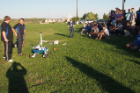
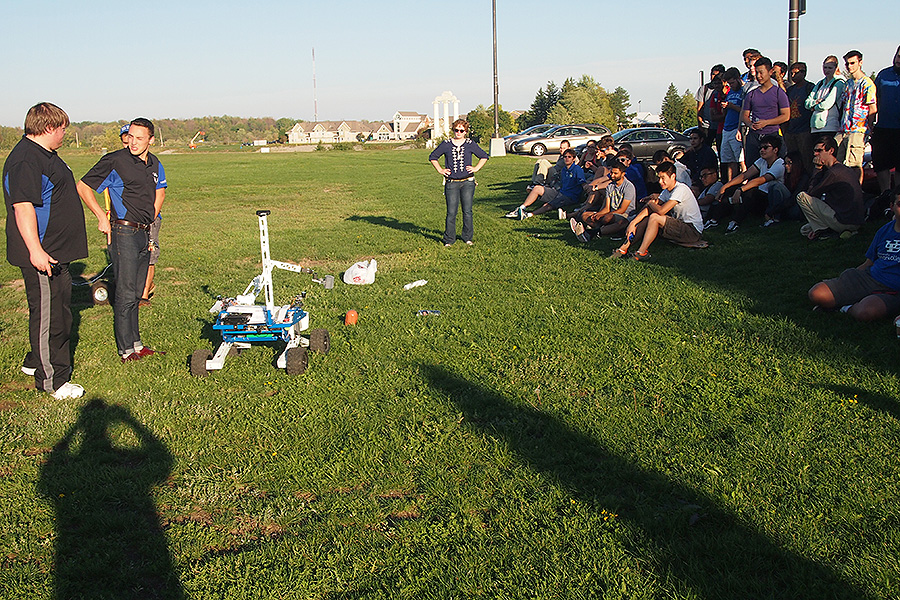
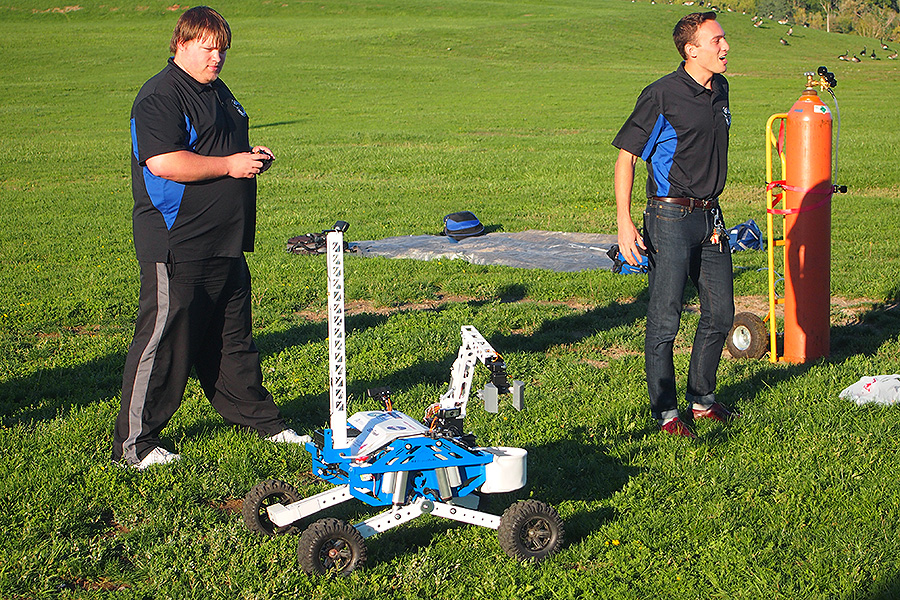
The UB Space Bulls show off their latest rover. Each year, the team of engineering students competes in a NASA competition among universities to design the best machine for navigating Mars.
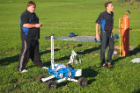
From left: Graduate students Kyle Thompson, electrical engineering, and Livio Forte III, mechanical and aerospace engineering, get the remote-controlled rover ready for a demonstration.
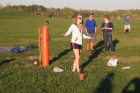
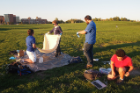
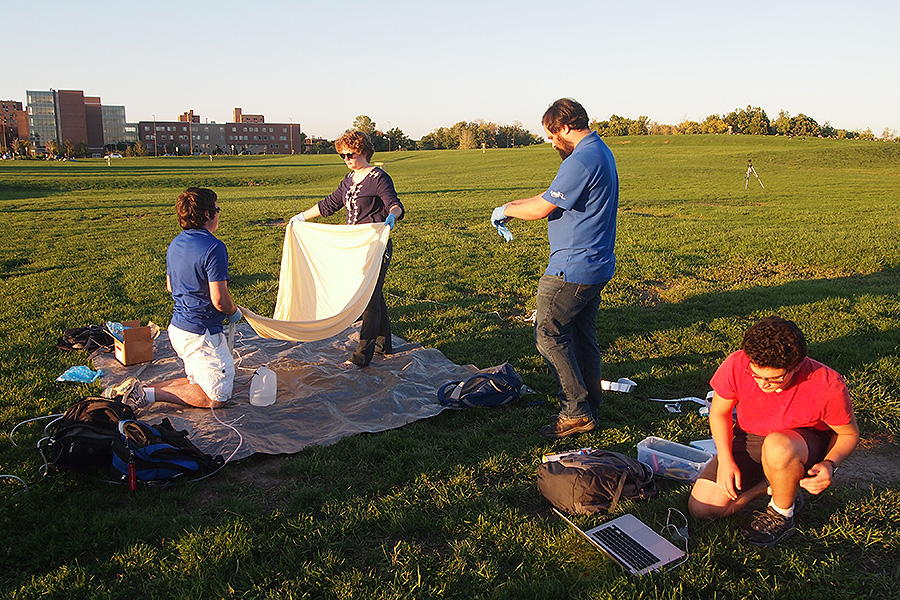
Maura Sutherland (foreground), a junior double-majoring in aerospace and mechanical engineering, helps gather the UB Nanosatellite Lab troops to conduct an experiment with a weather balloon.
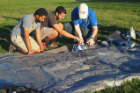
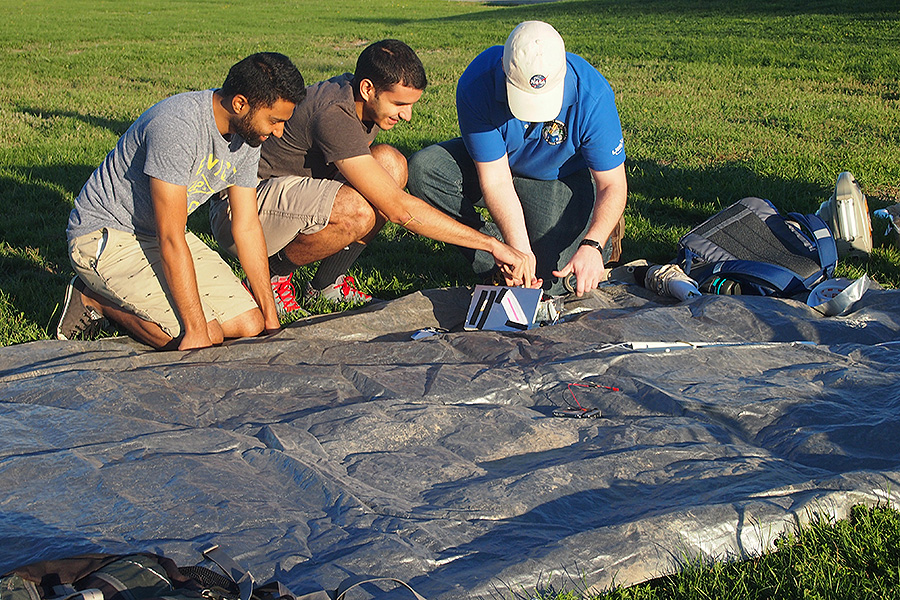
From left: Students Rohan Kuriakose, Ali Alqaraghuli and Aaron Schwab prepare the instruments for the weather balloon launch.
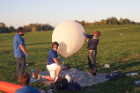
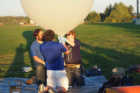
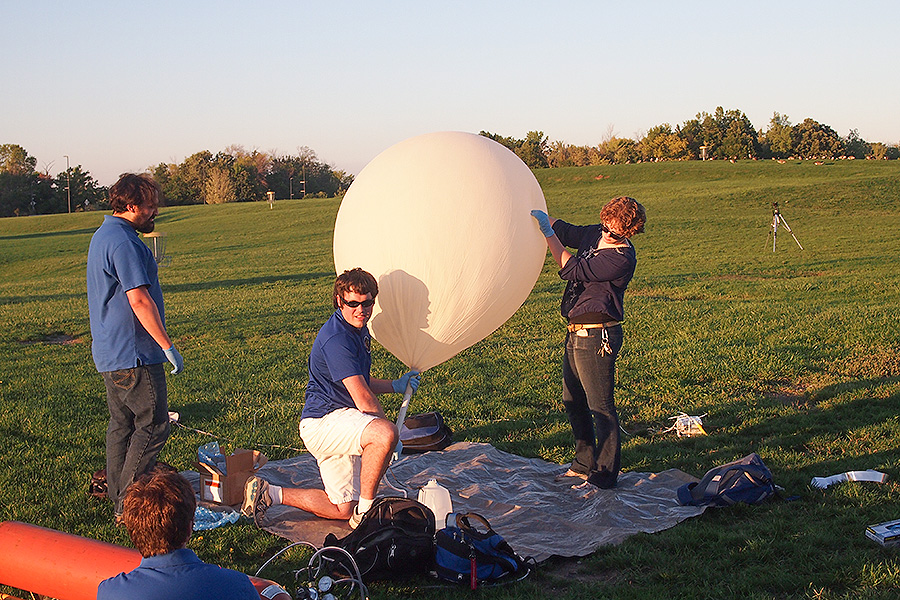
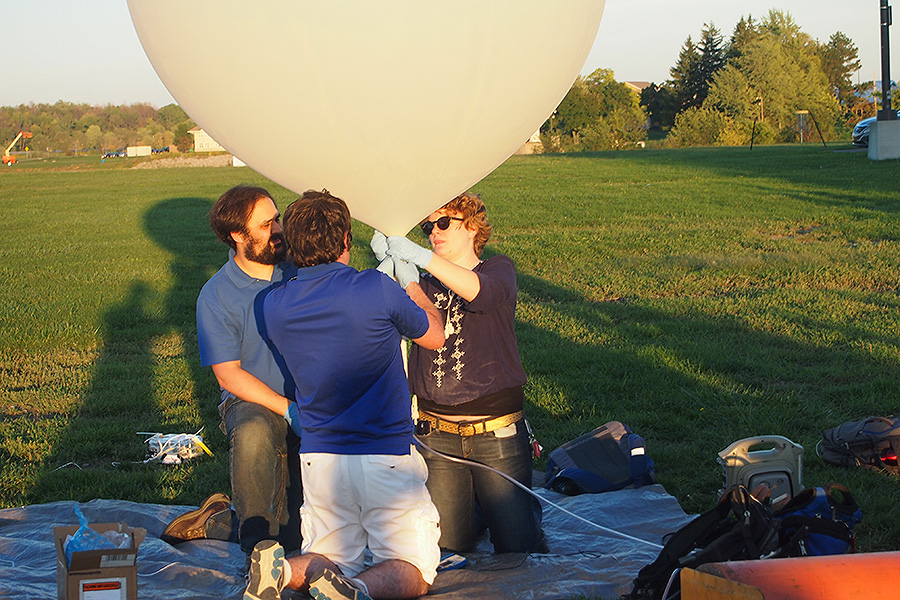
From left: Brian Bezanson, Mara Boardman and Andrew Dianetti, all members of the Nanosatellite Lab, prepare the balloon for launch.
From left: Andrew Dianetti, Mara Boardman and Brian Bezanson fill the balloon.
The weather balloon experiment is part of a project called LinkSat, led by UB faculty member Manoranjan Majji and supported by NASA.
Students will track the balloon by downlinking its GPS position to the ground over a radio.
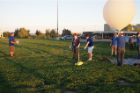
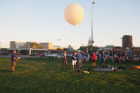
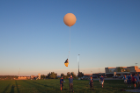
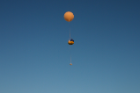
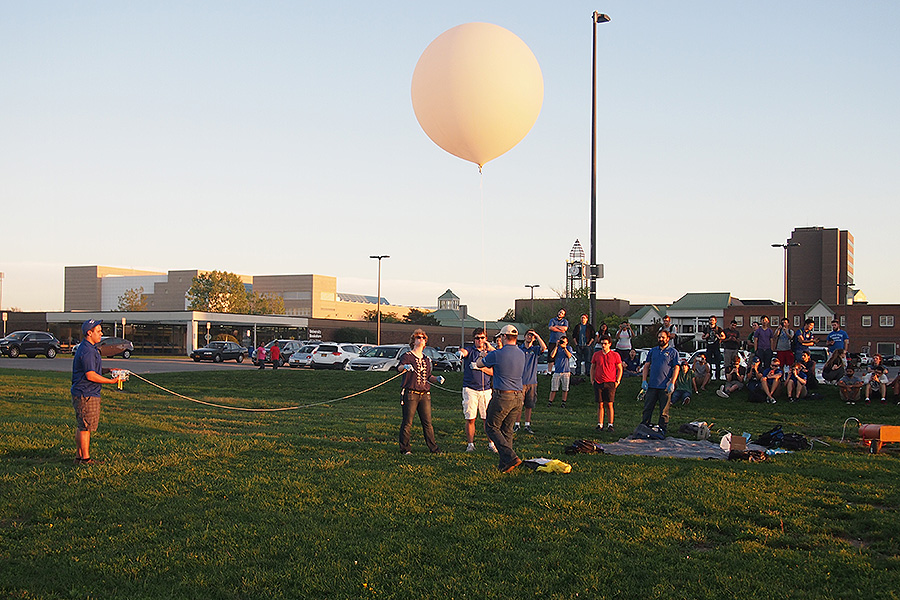
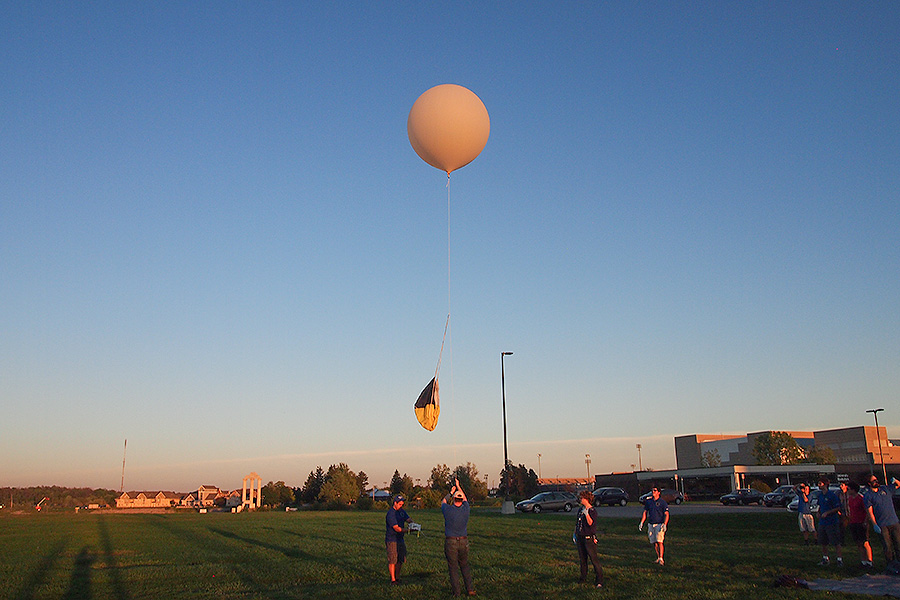
Up, up and away!
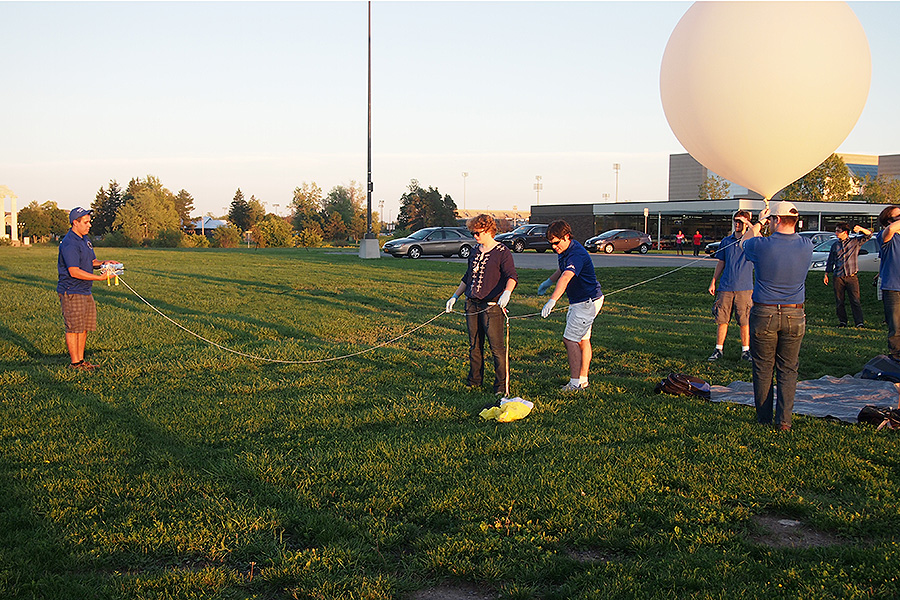
A parachute is placed between the instruments, held by the student on the left, and the balloon to ensure the instruments land safely and are recoverable.
The balloon flew roughly 20 miles into the sky and traveled 100 miles east to Geneva, N.Y., before bursting due to thinning atmospheric pressure. The instruments, which landed in a field, measured radio frequency noise, important in satellite applications, as a noisier environment makes communication with the spacecraft more difficult.
Published April 11, 2017 This content is archived.