Fathy Attia
PhD Candidate
Haiqing Lin Research Group
Wednesday
April 29, 2026
Semi-crystalline PolyMOFs for Membrane H2/CO2 Separation
Abstract
Poly(metal-organic frameworks) (polyMOFs) are emerging as promising materials for high-performance gas separation membranes. However, developing such membranes with a synergistic combination of hierarchical porosity and complex morphology while maintaining processability and mechanical robustness remains a formidable challenge. Herein, we report a facile one-step synthesis of two distinct series of ZIF-type polyMOFs using mixed-ligands (2-methylimidazole (2-mIm) and polybenzimidazole (PBI)). The benzimidazole moieties on the PBI backbone with a chemical structure analogous to 2-mIm provide dense coordination sites that guide the nucleation of crystalline ZIF-8 and facilitate the formation of a percolated network, particularly at high ZIF loading (i.e., 36 %). By meticulously controlling the molar ratios and reaction conditions, we successfully tuned the morphology of the resulting polyMOF from amorphous (PMFa) to highly crystalline (PMFc), achieving superior H2/CO2 separation performance. For example, a PMFc containing 17% ZIF-8 (PMFc-17 ) exhibits H2 permeability of 12 Barrer and a remarkable H2/CO2 selectivity of 67 at 100 °C, far surpassing Robeson’s upper bound. By contrast, the amorphous PMFa-17 shows H2 permeability of 24 Barrer but lower selectivity (16). These results highlight a robust paradigm for designing crystalline polyMOF materials from functional MOF-ligand-containing polymers for advanced separation applications.
Bio
Fathy Attia is a Ph.D. candidate in Chemical Engineering in Dr. Haiqing Lin’s lab of Innovative Membranes at the University at Buffalo. His research focuses on developing high-performance Polymer-Metal Organic Framework (polyMOF) hybrid materials and bottlebrush polymers for H2/CO2 and CO2/N2 separations.
His academic background is distinguished by graduating first in his class at Mansoura University, where he earned both his B.S. (2010) and M.S. in organic chemistry (2016). His career includes a decade of teaching a wide range of organic chemistry courses and a two-year visiting research scholar at NC State University (2018-2020), focusing on the synthesis and fabrication of organic dyes and hole-transporting materials (HTMs) for dye-sensitized and perovskite solar cells. A co-author of seven peer-reviewed publications in prestigious journals, including Chemistry of Materials, he was recently honored with the Outstanding Presentation Award at the 2026 ACS Spring Meeting.

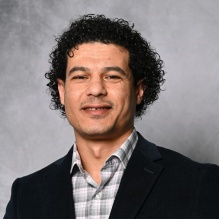
Fathy Attia
PhD Candidate
Haiqing Lin Research Group
- Time: 11:00 AM
- Location: 206 Furnas Hall
Mohd Ashhar Khan
PhD Candidate
Mark Swihart Research Group
Wednesday
April 29, 2026
Flame-Driven Aerosol Synthesis of Stable, High-Performance, and CO2 Tolerant High-Temperature Water Gas Shift (HT-WGS) Catalysts Using Multiple Promoters
Abstract
The water gas shift reaction converts carbon monoxide and steam (CO and H2O) to carbon dioxide and hydrogen (CO2 and H2). In combination with CO2 capture, it is an important step in the production of “blue” hydrogen. However, commercial ferrochrome catalysts have limited catalytic activity along with environmental concerns associated with chromium. Moreover, they suffer from CO2 inhibition and deactivation under CO2-rich conditions. CO2 inhibition particularly limits their performance in catalytic membrane reactors in which H2 removal is integrated with reaction for process intensification and to achieve higher CO conversion at lower temperature. To address this gap, we designed and prepared novel multicomponent high performance and ultrastable CO2-tolerant nano-catalysts using a unique flame-based aerosol process for catalyst synthesis. Starting from Fe-based multicomponent oxide frameworks, e.g., (FeCrMnCoNi)Ox high-entropy metal oxide (HEMO), chromium replacement was systematically explored using alternative promoter elements including Al, Ce, Nb, and V, with vanadium emerging as the best performing element capable of enabling a structurally stable and catalytically active Cr-free catalyst. Our goal was to find a set of promoters that together exhibit synergistic effects thus weakening CO2 adsorption to reduce inhibition without affecting activity. Our unique process for producing high-entropy metal oxides (HEMO) opens up a vast composition space for producing these catalysts with multiple promotors. We conducted kinetic studies on these HEMO catalysts to quantify CO2 and H2O inhibition, along with activation energies. This study allowed us to synthesize catalysts that enable higher CO conversion rate, higher H2 production, and high resistance to CO2 inhibition and sintering.
Bio
Mohd Ashhar Khan is a senior Ph.D. candidate in Chemical and Biological Engineering at the University at Buffalo, SUNY, in Swihart’s lab. His research focuses on the scalable synthesis of high-entropy metal oxide materials for clean energy applications, particularly catalysts for the high-temperature water-gas shift reaction using a novel flame aerosol synthesis method. His work explores catalyst structure-property relationships, and the development of catalysts with improved activity, stability, and CO2 tolerance for sustainable hydrogen production. He has also contributed to research on high-entropy oxide materials as anodes for lithium-ion battery applications, reflecting his broader interest in sustainable materials for energy conversion and storage. Ashhar has co-authored eight peer-reviewed publications, including first-author paper and co-authored publication in Nature Communications, with his collaborative research contributions receiving over 500 citations.


Mohd Ashhar Khan
PhD Candidate
Mark Swihart Research Group
- Time: 11:00 AM
- Location: 206 Furnas Hall