Jian Shi
Professor
Rensselaer Polytechnic Institute
Department of Materials Science and Engineering and Physics
Wednesday
March 11, 2026
Epitaxy: From Basic Mechanisms to Tuning Symmetry-Breaking Susceptibility and Topology
Abstract
Epitaxy is increasingly a decisive tool for quantum information science because it can control three ingredients that quantum platforms depend on: (i) defects and interfaces that limit coherence, (ii) symmetry constraints that determine which topological phases are realizable, and (iii) heterogeneous integration pathways needed to scale complex quantum hardware. In this talk, I will first describe the basic science and enabling capability of long-distance remote epitaxy [1], highlighting how it expands the design space for integrating high-quality crystalline materials beyond conventional substrate constraints. I will then discuss epitaxy-controlled polarity in ultrathin membranes, using giant pyroelectricity in nanomembranes [2] and orientation engineering as a route to device-relevant polar responses, including implications for single-phonon acoustic devices. Finally, I will present mirror-symmetry engineering in topological III–V systems [3] as an example of epitaxy and strain acting as practical “Hamiltonian knobs” that can drive topological phase transitions and switch Chern numbers.
Bio
Dr. Jian Shi is a Professor in the Departments of Materials Science and Engineering and Physics at Rensselaer Polytechnic Institute. He was a postdoctoral research fellow at Harvard University (2013–2014) and received his Ph.D. in Materials Science from the University of Wisconsin–Madison (2012). Dr. Shi is a recipient of the AFOSR Young Investigator Program Award (2018), the IEEE Ferroelectrics Young Investigator Award (2023), and the Simons Foundation Pivot Fellowship (2024). He also serves as an Associate Editor of the Journal of Applied Physics. His research focuses on polar, spintronic, chiral, Berry-curvature–tunable, and superconducting materials for future computing. More information is available at: https://faculty.rpi.edu/jian-shi

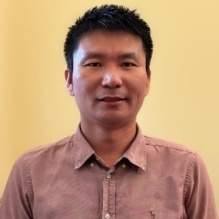
Jian Shi
Professor
Department of Materials Science and Engineering and Physics
Rensselaer Polytechnic Institute
- Time: 11:00 AM
- Location: 206 Furnas Hall