Carl Lund
SUNY Distinguished Teaching Professor
University at Buffalo
Department of Chemical and Biological Engineering
Wednesday
April 1, 2026
A Problem-Solving Course Design for Improved Student Learning Efficiency
Abstract
Students enrolled in an engineering problem-solving course are expected to develop and demonstrate mastery of the course learning objectives. Minimizing the time students need to do so without compromising the learning objectives benefits all students. Their academic achievement, self-efficacy, motivation, persistence, and satisfaction with their career choice can all be impacted when they learn more efficiently. Learning efficiency can be characterized in terms of the number of example, guided practice, and unguided practice problems the student must attempt before they are able to correctly solve a particular type of problem as specified in the course learning objectives. (Alternatively, the time students spend on example and practice problems could be used as a measure of a student’s required effort, but it is less accessible to the instructor.) Key factors that affect the required effort for a particular student are their prior knowledge, self-efficacy, motivation, goal orientation, perseverance, and exam anxiety. Those factors can be targeted in course design elements including the specification of the learning objectives, establishing a mastery goal structure, a flipped classroom course delivery, exposure of expert thinking, class preparation assignments, scaffolded and guided practice, unguided practice, self-generated feedback, and assessment methodology. The undergraduate chemical reaction engineering course at U. B., CE 329, will be used to illustrate a problem-solving course design and implementation that uses those design elements with the goal of promoting efficient student learning.
Bio
Carl R. F. Lund is a SUNY Distinguished Teaching Professor in the Department of Chemical and Biological Engineering at the University at Buffalo. His research interests include pedagogy for problem-solving courses, heterogeneous catalysis, and reaction engineering. He is an author or co-author of over 200 papers, presentations, and book chapters.
Dr. Lund earned a B. S. from Purdue University and a Ph. D. from the University of Wisconsin - Madison, both in chemical engineering. He worked at the Exxon Corporate Research Laboratories for five years prior to joining the faculty at the University at Buffalo. He is a past chair of both the Department of Chemical and Biological Engineering and the Department of Engineering Education at U. B., and a fellow of the AIChE.
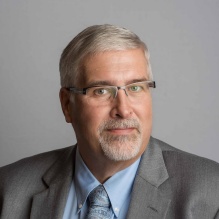
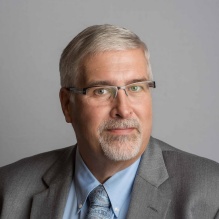
Carl Lund
SUNY Distinguished Teaching Professor
Department of Chemical and Biological Engineering
University at Buffalo
- Time: 11:00 AM
- Location: 206 Furnas Hall