Francesco Paesani
Professor
University of California San Diego
Department of Chemistry and Biochemistry, Materials Science and Engineering, Halicioglu Data Science Institute
Wednesday
April 22, 2026
Predictive Simulations of Aqueous Systems Across Phases and Environments with Data-Driven Many-Body Potentials
Abstract
Understanding the behavior of water across phases and environments, whether in the bulk, at interfaces, under confinement, or in the hydration shell of biomolecules, remains a central challenge in theoretical and computational chemistry. In this talk, I will present our efforts to address this challenge through a unified, data-driven many-body formalism that rigorously combines the physics of many-body interactions with the flexibility of machine learning. Our data-driven many-body MB-pol and MB-nrg potentials, rigorously derived from coupled-cluster reference data, provide an accurate and transferable description of water and aqueous systems from the gas to the condensed phase. I will highlight key applications including: (i) the prediction of thermodynamic properties of water across its phase diagram; (ii) the hydration structure and vibrational signatures of halide and alkali metal ions from gas-phase clusters to aqueous solutions; and (iii) the molecular properties of water under heterogeneous confinement. By capturing the complex balance of short- and long-range interactions at all orders and properly accounting for nuclear quantum effects, our data-driven many-body simulations establish a new benchmark in the predictive modeling of aqueous systems, offering realistic insights into the underlying molecular interactions and mechanisms, advancing applications in materials science, biophysics, and environmental chemistry.
Bio
Professor Francesco Paesani received his Ph.D. in Theoretical Physical Chemistry from the University of Rome “La Sapienza” in 2000. He was a postdoctoral fellow at the University of California, Berkeley, and at the University of Utah. In 2009, he joined the faculty of the University of California, San Diego, where he was promoted to Associate Professor in 2015 and Professor in 2017. He was the Kurt Shuler Faculty Scholar in the Department of Chemistry and Biochemistry from 2020 to 2025, and is affiliated with the Materials Science and Engineering graduate program and the San Diego Supercomputer Center. He is a founding member of the Halicioǧlu Data Science Institute. His research focuses on the development, implementation, and application of many-body theories at the intersection of chemistry, physics, and computer science for predictive molecular simulations of complex systems. He received the ACS OpenEye Outstanding Junior Faculty Award in Computational Chemistry in 2014, the NSF CAREER Award in 2015, the ACS Early Career Award in Theoretical Chemistry in 2016, the Legacy Lecture Award from UC San Diego student body in 2017, and the Cozzarelli Prize in 2019 from the National Academy of Sciences U.S.A. In 2024, he was elected Fellow of the American Physical Society. He has held several roles within the American Chemical Society, including serving as Chair of the Theoretical Chemistry Subdivision in 2019 and, since 2023, serving in the leadership of the Division of Physical Chemistry, where he currently serves as Chair. He has been an Associate Editor for Science Advances since 2019.

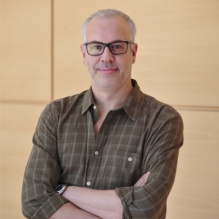
Francesco Paesani
Professor
Department of Chemistry and Biochemistry, Materials Science and Engineering, Halicioglu Data Science Institute
University of California San Diego
- Time: 11:00 AM
- Location: 206 Furnas Hall