Jingjie Wu
Associate Professor
University of Cincinnati
Department of Chemical Engineering
Wednesday
February 25, 2026
From Catalyst, Microenvironment, to Reactor: Multiscale Design for Scalable CO2 Electrolysis
Abstract
Electrochemical CO2 reduction (CO2RR) represents a compelling route to electrify chemical manufacturing and enable carbon-neutral production of fuels and commodity chemicals. Despite rapid advances in catalyst discovery, most systems fail to translate from laboratory demonstrations to industrially relevant operation. Key barriers include limited product selectivity, temperature-induced selectivity shifts under stack operation, and long-term degradation caused by salt precipitation and electrode flooding.
In this seminar, I will present a multiscale reaction engineering framework that bridges atomic-level catalyst design, electrode structure engineering, interfacial microenvironment control, and reactor-level architecture to enable scalable CO2 electrolysis. At the molecular scale, single-site metal doping of Cu catalysts tunes surface oxygen affinity and balances kinetic barriers in post-C-C coupling steps, directing the selectivity to ethylene over ethanol. At the electrode scale, tandem gas-diffusion architectures inspired by plug-flow reactor principles enhance intermediate utilization and C2+ formation through controlled transport and residence time engineering. Integration of single-site metal doped Cu into tandem electrodes achieves record ethylene selectivity at ampere-level current densities. At elevated temperatures relevant to industrial stacks, restructuring of the interfacial hydrogen-bond network and pressure modulation are leveraged to maintain intrinsic activity and recover ethylene selectivity. Finally, reactor-level innovations, including active salt-removal architectures and flooding mitigation strategies, translate these advances into stable operation exceeding 1,000 hours under industrially relevant conditions. Together, this work demonstrates how coupling mechanistic insight with transport engineering and stack design can bridge the gap between fundamental electrocatalysis and deployable CO2-to-chemicals systems.
Bio
Dr. Jingjie Wu is an Associate Professor of Chemical Engineering at the University of Cincinnati, where he leads a research program focused on multiscale reaction engineering for sustainable chemical manufacturing and autonomous high-throughput catalyst discovery. His pioneering work on tandem gas-diffusion electrodes for CO2 electrolysis has been highlighted by the U.S. Department of Energy Office of Science for advancing scalable carbon conversion technologies. His research is supported by the U.S. Department of Energy, the National Science Foundation, and the American Chemical Society. Dr. Wu is a recipient of the ORAU Ralph E. Powe Junior Faculty Enhancement Award and University of Cincinnati Early Career Research Award, and has been recognized as an Emerging Investigator, Rising Star, and Pioneering Investigator by Chemical Communications, Chem Catalysis, Energy & Fuels, Journal of Materials Chemistry A, and Materials Chemistry Frontiers for his contributions to electrocatalysis and sustainable energy research.

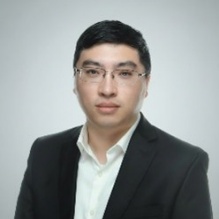
Jingjie Wu
Associate Professor
Department of Chemical Engineering
University of Cincinnati
- Time: 11:00 AM
- Location: 206 Furnas Hall