External Collaborators: Yanlin Guo - Assistant Professor, Colorado State University, United States Department of Energy (DOE) Renewables Advancing Community Energy Resilience (RACER)
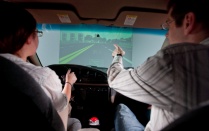
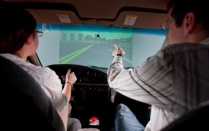
At the 2023 Modeling and Simulation (MODSIM) World 2023 Conference in Norfolk, Virginia, ISTL Director Kevin Hulme, PhD, and his team of transportation engineering researchers presented their findings in the application of different video game engine simulations to enhance transportation research.
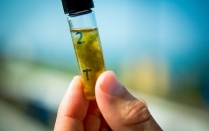
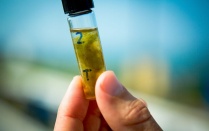
External Collaborators: Erie County (NY) Department of Environment and Planning, New York State Department of Health, Syracuse University, Ceres Nanosciences
Traffic incidents have significant negative impacts on the safety and efficiency of overall transportation system performance. The transportation community has consistently strive to improve the transportation incident management process. This project demonstrates the ability of the NYSDOT, GDIT and IIMS to improve traffic incident management.
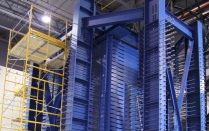
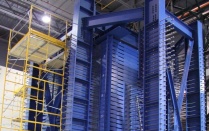
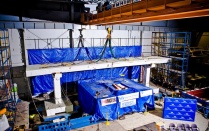
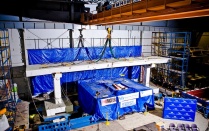
All nuclear power plants are required to have a significant level of resistance to the effects of earthquake shaking, but the safety-grade nuclear equipment is generally large and routinely custom-made for each nuclear plant. Whittaker’s team will simplify plant design and standardize the equipment to drive down cost and speed construction.
Heteroepitaxial Growth of Functional Materials & Devices; Strain-driven Self-Assembly of Advanced Materials; Advanced Energy and Electronic Materials; Clean Energy Technologies.
Microplastics enter the environment from the breakdown of macroplastics that often come from cosmetics, synthetic fibers on clothing, tire ware, industrial processes, packaging and more.
Nature News reported on ways that AI may be used to revolutionize plastic recycling and mentioned that Amit Goyal is working to develop a barcode system that can identify plastic types, aiming to reduce contamination and improve recycling rates.
The National News reported on how AI can be used to increase plastic recycling rates and quoted Amit Goyal, who is working on the use of “bar codes” to indicate what type of plastic an item is made of to help the process of sorting different recyclable materials.
Research in environmental engineering seeks to better understand the physical, chemical, and biological processes that influence the health of our environment and to pursue innovative solutions for its protection. Researchers in this area also focus on engineering sustainability.
Research in geosystems engineering addresses computational geomechanics, deep foundations, ground improvement, seismic response of soils, liquefaction, and retrofit of foundations, dams, slopes, and retaining walls.
Researchers in the structural engineering, mechanics and materials group enhance community resiliency to earthquakes, develop design guidelines for buildings and other structures, and conduct vital research in various emerging areas such as wind, fire and materials engineering.
Research in transportation systems engineering focuses on improving the efficiency, safety, sustainability, and resiliency of surface transportation systems.