Students Fan Wang and Yulun Wu
Fan Wang
PhD Candidate
Miao Yu Research Group
Wednesday
December 3, 2025
Towards Industrial CO2 Capture: Scalable Nanoconfined Ionic Liquid Membranes
Abstract
Ionic liquid membranes have emerged as a promising option for industrial decarbonization because their solubility-driven transport enables selective and efficient CO2 separation. However, conventional ionic-liquid membranes often suffer from liquid loss, limited stability, and challenges in forming uniform large-area membranes during scale-up, leading to performance degradation under the humidity, impurities, and pressure variations characteristic of real flue gas environments.
To address these challenges, our research explores a nanoconfined ionic liquid (NCIL) design, in which task-specific ionic liquids are immobilized within a nanoscale scaffold. This structure stabilizes the ionic liquid phase while maintaining its mobility required for selective CO2 transport. The objective of this work is to develop ionic liquid-based membranes that sustain high performance under industrially relevant operating conditions.
A scalable fabrication strategy was established to enable the integration of NCIL structure into hollow fiber modules suitable for field deployment. The resulting modules exhibited stable separation performance and structural robustness in both laboratory evaluations and field testing using real flue gas. These findings demonstrate that nanoscale confinement provides a practical route toward enhancing the stability and scalability of liquid-based membranes for CO2 capture.
Bio
Fan Wang is a Ph.D. candidate in Chemical Engineering at the University at Buffalo, working under the supervision of Prof. Miao Yu. He earned his B.S. in Chemical Engineering from the Beijing University of Chemical Technology and his M.S. from Case Western Reserve University. His research focuses on developing nanoconfined ionic liquid (NCIL) membranes for efficient CO2 capture, with emphasis on transport mechanisms, membrane scale-up, and bench-scale validation. He has led DOE-funded efforts to fabricate large-area membranes and evaluate their performance with real flue gas at the National Carbon Capture Center. He has presented at 3 conferences and authored or co-authored 10 publications, including work published in Science Advances and Advanced Functional Materials, and has filed a U.S. provisional patent.
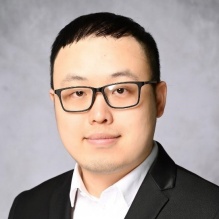
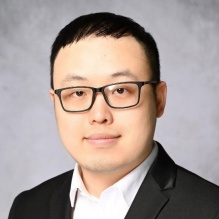
Fan Wang
PhD Candidate
Miao Yu Research Group
- Time: 11:00 AM
- Location: 206 Furnas Hall
Yulun Wu
PhD Candidate
Stelios Andreadis Research Group
Wednesday
December 3, 2025
Bioinspired Self-Healing and Acellular Vascular Grafts for Hemodialysis Applications
Abstract
Cardiovascular disease stands as the leading cause of mortality in the United States, with coronary artery disease being the most prevalent form with over 370,000 bypass grafting procedures annually. End-stage renal disease (ESRD) is also major cause of mortality, affecting more than 800,000 patients, with approximately 570,000 of them undergoing hemodialysis. The prevalence of these diseases underscores the urgent need for durable vascular grafts, particularly for hemodialysis access. However, current synthetic grafts cannot autonomously repair damage caused by repeated cannulation, leading to bleeding, thrombosis, and early graft failure.
To address these limitations, we developed a bilayer self-healing tissue-engineered vascular graft (SH-TEV) composed of a polyurethane-based autonomous self-healing polymer (PU-DAA) electrospun around a small intestinal submucosa (SIS) scaffold, a decellularized collagen matrix. PU-DAA incorporates reversible hydrogen bonds and dynamic oxime bonds, enabling rapid self-repair under physiological conditions, while maintaining high mechanical strength and toughness. Most notably, upon implantation in a rat model, SH-TEVs exhibited 100% patency, native-like remodeling, and rapid, autonomous self-healing after needle puncture (<40 s). These findings highlight SH-TEVs as a promising next-generation vascular grafts, providing an attractive alternative option for ESRD patients undergoing hemodialysis.
Bio
Yulun Wu is a Ph.D. candidate in the Department of Chemical and Biological Engineering (CBE) at University at Buffalo (UB) under the guidance of Prof. Stelios Andreadis. She received her B.S. in Chemical Engineering from Rutgers University - New Brunswick. Yulun’s research focuses on developing innovative strategies to combat vascular aging and engineering next-generation vascular grafts that integrate advanced biomaterials for self-sealing and vascular regeneration. Her work has been published in Biomaterials and filed for U.S. provisional patent. During her Ph.D., she has co-authored four peer-reviewed publications, with several more under review. She is also a recipient of the Ajinkya fellowship (2020) and the 2025 AIChE Women in Chemical Engineering (WIC) Travel Award.
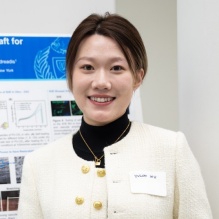
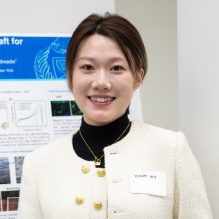
Yulun Wu
PhD Candidate
Stelios Andreadis Research Group
- Time: 11:00 AM
- Location: 206 Furnas Hall