Ashok K. Ganguli
Director, Prof N K Jha Chair
Indian Institute of Science Education & Research, Indian Institute of Technology Delhi
Department of Chemical Sciences, Department of Chemistry
Tuesday
October 21, 2025
Reverse Micelles as Tunable Nanoreactors: Insights into Structure, Dynamics, and Templated Nanostructure Growth
Abstract
Nanostructured materials exhibit unique size- and shape-dependent properties that make them indispensable in fields ranging from catalysis and drug delivery to optics and electronics. A crucial aspect in their synthesis is the ability to control morphology at the nanoscale. Among the available synthetic strategies, the reverse micelle (RM) method has proven to be one of the most versatile, offering a soft, low-temperature route to tailor both size and shape while often maintaining monodispersity1. Our group’s research has focused on correlating microstructural transformations of RMs with the size, shape, and growth kinetics of nanostructures synthesized within them. Our research2,3 demonstrated solvent-induced modulation of droplet architecture highlights the sensitivity of RM systems to molecular-level interactions within the continuous oil phase. Significant contributions of this research include unraveling the growth mechanisms of anisotropic nanostructures, such as nanorods, within RM templates4 using a combination of advanced techniques, including fluorescence correlation spectroscopy (FCS), dynamic light scattering (DLS), small-angle X-ray scattering (SAXS), NMR, and transmission electron microscopy (TEM). Critical findings, such as the identification of a nucleation-to-rod transition at ~55–80 nm dimensions, demonstrated the role of droplet geometry in dictating product morphology. We have also used solvation and hydration dynamics as molecular probes to track perturbations within micellar interiors during nanostructure formation.5,6
References:
(1) Ganguli, A. K.; Ganguly, A.; Vaidya, S., Chem. Soc. Rev. 2010, 39, 474−485.
(2) Sharma, S.; Yadav, N.; Chowdhury, P. K.; Ganguli, A. K., J. Phys. Chem. B. 2015, 119, 11295−11306.
(3) V. Sethi, J. Mishra, A. Bhattacharyya, D. Sen and A. K. Ganguli, Phys. Chem. Chem. Phys., 2017, 19, 22033–22048.
(4) Sharma, S.; Pal, N.; Chowdhury, P. K.; Sen, S.; Ganguli, A. K., J. Am. Chem. Soc. 2012, 134, 19677−19684.
(5) Yadav, N.; Chowdhury, P. K.; Ganguli, A. K., J. Phys. Chem. B 2019, 123, 5324−5336.
(6) Sunaina; Sethi, V.; Mehta, S. K.; Ganguli, A. K.; Vaidya, S., Phys. Chem. Chem. Phys. 2019, 21, 336−348.
Bio
Professor Ashok Kumar Ganguli is the Director of the Indian Institute of Science Education and Research (IISER), Berhampur, India, and held the Prof N K Jha Chair in the Dept. of Chemistry, Indian Institute of Technology (IIT) Delhi. He served as founding Director of the Institute of Nano Science and Technology in Mohali (Jan 2013- Jan 2018). Prof. Ganguli earned his PhD degree from the Indian Institute of Science, Bangalore, and has been a visiting scientist at Dupont Company and at Ames Laboratory, Iowa State University, and visiting professor at EPFL, Lausanne. His areas of interest include design of nanostructured materials for applications in water purification, solar energy conversion and microfluidic devices. His awards include the National Award of Nano Science and Nanotechnology given by DST, Government of India, the Chemical Research Society of India (CRSI) Silver Medal, the Materials Research Society of India (MRSI) Medal, the C.N.R. Rao-CRSI National Award, Chemical Excellence Award by the Indian Society of Chemists and Biologists and the Bangalore India Nano award given by Karnataka Govt. He is a fellow of the Royal Society of Chemistry, the Indian Academy of Sciences, the National Academy of Sciences, India and the Asia–Pacific Association of Materials. He is an Associate Editor of the Bulletin of Material Science and on several editorial boards.
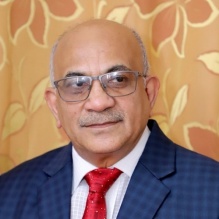
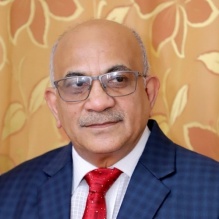
Ashok Kumar Ganguli
Director, Prof N K Jha Chair
Department of Chemical Sciences, Department of Chemistry
Indian Institute of Science Education & Research, Indian Institute of Technology Delhi
- Time: 10:00 AM
- Location: 206 Furnas Hall