University at Buffalo (UB)

AI and Society Workshop
The vision of the University at Buffalo’s new Department of AI and Society (AIS) is to create a future world where AI systems are built by society for society. We believe this is only possible by centering the community throughout all stages of AI systems development through meaningful engagements among the humanities, social sciences, arts and computing.
This workshop is a space for researchers and community organizers to interact and explore ways to build new AI systems by society, for society. The workshop will feature talks and panels on labor, public services and AI.
AIS was created with a $5 million grant from SUNY, and this workshop has been made possible with its support.
Registration is free, but required to attend the workshop. Please register at this link.
Thursday, February 26
| Session | Time | Speaker |
|---|---|---|
| Welcome Remarks | 1:00 - 1:05 p.m. | Atri Rudra, UB AIS |
| Opening Remarks | 1:05 - 1:15 p.m. | F. Shadi Sandvik, SUNY Senior Vice Chancellor for Research, Innovation & Economic Development |
| Less hype, more hope: digital discernment for the nonprofit human services | 1:20 - 1:40 p.m. | Lauri Goldkind, Fordham University |
| Justice in Human Services AI: A Value Source Analysis of NYS Administrative Child Welfare Policy | 1:40 - 2:00 p.m. | Maria Rodriguez, UB AIS |
| Q&A | 2:00 - 2:10 p.m. | |
| Small, Local, Open, and Energy-Efficient: A Practical Path to AI in Social Work | 2:10 - 2:30 p.m. | Brian Perron, University of Michigan |
| Community-Engaged AI for Youth Homeless Services: A Perspective on Data, Equity and Opportunity | 2:30 - 2:50 p.m. | Eric Rice, University of Southern California |
| Q&A | 2:50 - 3:00 p.m. | |
| Coffee Break | 3:00 - 3:15 p.m. | |
| Human Services and AI panel | 3:15 - 4:00 p.m. | Panelists: Lauri Goldkind JoAnn Lee Laura Maggiulli Eric Rice Moderator: Maria Rodriguez |
| AIS research and education panel | 4:00 - 4:45 p.m. | Panelists: X. Christine Wang David Castillo Dalia Antonia Caraballo Muller Moderator: Kenneth Joseph |
| Closing Remarks | 4:45 - 4:50 p.m. | Venu Govindaraju, UB Senior Vice President for Research, Innovation and Economic Development, SUNY Distinguished Professor |
Friday, February 27
| Session | Time | Speaker |
|---|---|---|
| Breakfast | 8:30 - 9:00 a.m. | |
| Opening Remarks | 9:00 - 9:05 a.m. | Kemper Lewis, Dean, UB School of Engineering and Applied Sciences |
| Challenging the cycle of efficiency, austerity, and devaluation in workplace AI adoption | 9:05 - 9:40 a.m. | Alexandra Mateescu, Data & Society |
| (Re)Working AI: Labor, Design, and the Governance of Workplace Technologies | 9:40- 10:15 a.m. | Sarah Fox, Carnegie Mellon |
| Recl(AI)ming AI in Care, Work, and Community | 10:15 - 10:50 a.m. | Joy Ming, University at Buffalo |
| Coffee Break | 10:50 - 11:05 a.m. | Coffee Break |
| AI and Community Organizing Panel | 11:05 - 11:50 a.m. | Panelists: Seventy Hall Monica Miles Moderator: Joy Ming |
| Closing Remarks | 11:50 - 11:55 a.m. | Jeffrey Grabill, Dean, UB College of Arts and Sciences |
Opening and Closing Remarks

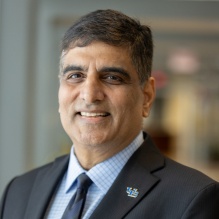
Venu Govindaraju
Senior Vice President for Research, Innovation and Economic Development, SUNY Distinguished Professor, University at Buffalo
Venu Govindaraju, Senior Vice President for Research, Innovation and Economic Development and SUNY Distinguished Professor, is also the founding director of the Center for Unified Biometrics and Sensors of Computer Science and Engineering at the State University of New York (SUNY) at Buffalo. He received his Bachelor’s degree with honors from the Indian Institute of Technology, Kharagpur in 1986, and his Ph.D. from SUNY Buffalo in 1992.
A recognized authority in the field of Pattern Recognition, Govindaraju has received peer honors such as the IAPR/ICDAR Outstanding Achievements (2015), Distinguished Alumnus Award from IIT Kharagpur (2014), the IEEE Technical Achievement Award (2010), MIT Global Indus Technovator Award (2004), and fellowships from the major professional societies such as AAAS, ACM, IAPR, IEEE, and the SPIE. He is a member of the National Academy of Inventors (2015).
Govindaraju is credited with major conceptual and practical advances in this area with six books and over 425 refereed publications. He has served on the editorial boards of several premier journals including the most prestigious IEEE Transactions on Pattern Analysis and Machine Intelligence and has been the Editor-in-Chief of IEEE Biometrics Council Compendium. Recently he served as the president of the IEEE Biometrics Council positioning it for consideration of a full fledged IEEE Technical Society.
Govindaraju has graduated 37 doctoral students as their major advisor and was recently awarded the University at Buffalo’s “Excellence in Graduate Student Mentoring Award (2017)”. He has given over a hundred invited talks, keynotes, plenaries and seminars, at prestigious venues including influential think tanks such as the Science and Technology Investment committee of the National Academy of Sciences.
Govindaraju has had active and continuous sponsorship from the National Science Foundation for the past 15 years (2002-17) and a career total of nearly $70M of sponsored funding as a Principal or Co-Principal Investigator from several federal and state agencies and industry. His annual research expenditures are consistently over $1.5M, making him a top performer at UB.
Govindaraju is the Chief Research Officer at UB with an annual operating budget of $35M and over 100 staff members reporting to the Office of the Vice President of Research and Economic Development. He sits on the President’s cabinet as well as the Provost’s cabinet and is responsible for managing UB’s research enterprise, including supporting scholarly excellence, creating collaborations, ensuring compliance in a regulatory environment, and oversees programs that contribute to regional job growth and a diversified economy in the Western New York region.


Jeffrey Grabill
Dean, College of Arts and Sciences, University at Buffalo
Jeff Grabill stepped into the role of dean of the College of Arts and Sciences, the largest academic unit at UB, on Aug. 1. Prior to coming to UB, Grabill served as deputy vice chancellor for student education at the University of Leeds in the United Kingdom. Before his time at Leeds, Grabill was at Michigan State University for nearly 20 years, serving as a professor and former chair of the Department of Writing, Rhetoric and American Cultures, and as associate provost for teaching, learning and technology.
A recognized leader in higher education, Grabill brings a strong track record of academic innovation, institutional leadership and interdisciplinary collaboration.


Kemper Lewis
Dean, School of Engineering and Applied Sciences, University at Buffalo
Kemper E. Lewis, PhD, MBA, and dean of UB’s School of Engineering and Applied Sciences, is a global leader in engineering design, system optimization and advanced manufacturing. Prior to being named dean, Lewis served as chair of UB's Department of Mechanical and Aerospace Engineering, where he was also the Moog Professor of Innovation.
Lewis is also the director of UB’s Community of Excellence in Sustainable Manufacturing and Advanced Robotic Technologies (SMART), an initiative that harnesses the strengths of faculty across the university to develop advanced manufacturing and design processes including autonomy, intelligence and materials technologies.
He is a Fellow of the American Society of Mechanical Engineers (ASME), and has served on the National Academies Panel on Benchmarking the Research Competitiveness of the United States in Mechanical Engineering. He has published over 200 refereed journal articles and conference proceedings and has been principal or co-principal investigator on grants totaling more than $33 million.
Active in the profession, Lewis chaired ASME’s Mechanical Engineering Department Head Executive Committee. He has received numerous awards in recognition of his teaching and research excellence from several professional societies, including ASME, the Society of Automotive Engineers, the American Society for Engineering Education, and the American Institute of Aeronautics and Astronautics.
Lewis joined UB in 1996. He earned a BS in mechanical engineering and a BA in mathematics from Duke University, his MS and PhD in mechanical engineering from Georgia Tech, and an MBA from UB.


F. Shadi Sandvik
Senior Vice Chancellor for Research, Innovation & Economic Development, SUNY
Dr. Shahedipour-Sandvik is SUNY’s senior vice chancellor for research, innovation and economic development, and a professor of nanoscale engineering. Since joining the SUNY System in 2020, she also served for nearly three years as SUNY’s provost-in-charge. Prior to this, she was vice president for research and founding dean of graduate studies at SUNY Polytechnic Institute.
An active researcher, Sandvik is an internationally recognized expert in wide bandgap semiconductors. She has authored more than 100 peer-reviewed journal publications, has given numerous technical talks and is a co-founder of two startups, with her research consistently funded by industry, state and federal agencies for more than two decades. She currently serves as chair of the Department of Defense–established American Institute for Integrated Photonics Leadership Council and previously served as editor-in-chief of the Journal of Electronic Materials for nearly a decade.
She has mentored numerous students and postdoctoral researchers, graduating more than a dozen PhDs who now hold roles at institutions such as the Naval Research Laboratory, Sandia National Laboratories, Intel, Infineon and Lam Research. Dr. Sandvik was recognized by the New York Capital Region Chamber of Commerce with the Women of Excellence Award in 2007, the New York governor’s Women of Excellence Award in 2005, the 2021 New York City & State Power 75, and is a recipient of an IBM Faculty Award. She earned her bachelor’s degree in physics from Tehran University, a PhD in solid-state physics from the University of Missouri, and completed postdoctoral work at Northwestern University.
Invited Speakers and Panelists


David Castillo
Professor of Spanish, Department of Romance Languages and Literatures, Co-Director, Center for Information Integrity, University at Buffalo
David R. Castillo is Professor of Spanish and co-director of the Center for Information Integrity at SUNY Buffalo where he served as Chair of the Department of Romance Languages and Literatures from 2009 to 2015 and Director of the Humanities Institute from 2016 to 2022.
Castillo is a recipient of the UB Exceptional Scholar Award for Sustained Achievement. His work in early modern literature and cultural history focuses on the damaging effects of inflationary media, including the proliferation of deceptive illusions and manipulative disinformation, and what we can learn from the “reality literacy” strategies of Miguel de Cervantes and other authors of the Spanish Golden Age to help us survive our post-truth age.


Lauri Goldkind
Professor, Graduate School of Social Service, Fordham University
Lauri Goldkind is a professor at Fordham’s Graduate School of Social Service and the Editor in Chief of the Journal of Technology in Human Services. She has also recently launched the Participatory AI Research, Education and Development (PAIRED) Lab. Goldkind’s current research has two threads: data justice and artificial intelligence in human services and nonprofits and artificial intelligence in social work practice. She has a robust network of community partners in New York City and internationally, including the International Federation of Settlement Houses, United Neighborhood Houses and Caritas Macau. She holds an M.S.W. from SUNY Stony Brook with a concentration in planning, administration, and research and a PhD from the Wurzweiler School of Social Work at Yeshiva University. goldkind@fordham.edu
Less hype, more hope: digital discernment for the nonprofit human services
The nonprofit human services sector serves as an extension of the social safety net in the United States and employs over 10 million people nationally. In New York alone, over 9,000 human service organizations employ nearly 1 million people. Often these agencies are starved for digital innovations. Generative AI and Large Language Models in particular offer opportunities for these agencies to reduce staff burnout and to increase the impacts of their services. This research explores current trends on AI use in the sector, the opportunities and challenges of using Gen AI in high stake human services decision making, and discusses the AI capabilities approach to critical AI literacy and co-design.


Laura Maggiulli, PhD, LMSW
Director of Research and Business Intelligence, Practice and Performance Excellence Group, Hillside, Rochester, NY
Laura Maggiulli, PhD, LMSW, serves as the Director of Research and Business Intelligence at Hillside, providing leadership for high-priority research and evaluation projects aligned with agency strategy and key areas of focus. In addition, Laura leads the Business Intelligence Team that supports the agency in performance management and improvement efforts through the use of data, measures, analysis, and reporting.
Laura’s research interests include evidence-based practice and evidence-informed assessment processes, implementation science, and child and adolescent behavioral health. She has published journal articles and presented at national and international conferences. Laura attained a BA in Psychology, a Master’s Degree in Social Work, and a PhD from the University at Buffalo.


Joy Ming
Assistant Professor, Department of AI and Society, University at Buffalo
Joy Ming has over a decade of experience in academia and industry working with community partners on socially impactful technology across multiple geographies (e.g., South/Southeast Asia, Sub Saharan Africa) and domains (e.g., disability justice, global health, civic engagement) as an NSF Graduate Fellow, software engineer at Google, and Fulbright researcher. She has made contributions to discourse in human-computer interaction, information and communication technologies for development, science and technology studies, and labor relations. Additionally, she creates real-world, community impact through technological artifacts, public writing, and policy campaigns.
Recl(AI)ming AI in Care, Work, and Community


Maria Rodriguez
Assistant Professor, Department of AI and Society, University at Buffalo
Maria Y. Rodriguez, MSW, PhD Rodriguez joined the University at Buffalo in 2020. Her research is at the intersection of applied demography, computational social science, and social policy. Dr. Rodriguez’ work explores systems of care across technology and human services. From offline child welfare systems to online social media platforms, her work examines the systems we build to care for marginalized groups, particularly how we make decisions about whom those groups are. Based on a central tenet of ethical social work practice, the aim of Dr. Rodriguez’ work is to support the reorientation of systems towards working best for outlier cases. In her work, Dr. Rodriguez explores if and how the values and ideals that define systems can come from the lived experience of the system involved.
Justice in Human Services AI: A Value Source Analysis of NYS Administrative Child Welfare Policy
Scholars investigating ethical AI, especially in high stakes settings like human services, have arguably been seeking ways to embed notions of justice into the design of these critical technologies. These efforts often operationalize justice at the upper and lower bounds of its continuum, defining it in terms of progressiveness or reform. Before characterizing the type of justice an AI tool should have baked in, we argue for a systematic discovery of how justice is executed within human service systems: a method the Value Sensitive Design (VSD) framework terms Value Source analysis. Using the NYS child welfare system as a use case, this talk presents research finds from an on-going project which examines the operationalization of justice within administrative policy. Results include a range of functional definitions of justice (which we term principles). These principles reflect nuanced understandings of justice across a spectrum of subtexts: from established concepts like fairness and equity to less common foci like the proprietary rights of parents and children. Our work contributes to a deeper understanding of the interplay between AI and policy, highlighting the importance of operationalized values in adjudicating the development of ethical design requirements for human service settings.

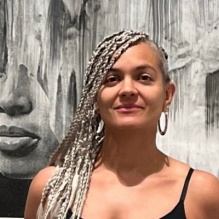
Dalia Antonia Caraballo Muller
Associate Professor, Department of Africana Studies, Director, Center for Ethnic Studies Research, University of Pittsburgh
Dalia Antonia Caraballo Muller’s academic work is motivated by her twin (and intertwined) passions: Afro-Latin American/Latinx intellectual history and educational program development for social and planetary justice. The through line that connects her historical work and her work in educational program building is the concept of “impossibility.” She is currently researching African and Afro-descended intellectuals in early 20th century Cuba who thought at the limits of the possible as they staked claims to rights, dignity and equality in a world that denied their full humanity. In her teaching and program building, Dr. Caraballo Muller invites her students to stretch their minds and think at the limits of the possible by engaging in freedom dreaming practices inspired by our ancestors of the African diaspora as they conjure new futures for our ailing world and planet.


Seventy Hall
Assistant Professor of Research, Department of AI and Society, University at Buffalo
Seventy F. Hall is a social worker and Assistant Professor of Research in the Department of Artificial Intelligence and Society at the University at Buffalo. Seventy’s research involves studying the use of AI as a tool for community building, economic organizing, and mutual aid. His current work aims to elaborate the techniques of a framework for cooperative action that focuses on constructing paths toward ideal social realities in collaboration with communities, particularly by grounding utopian visions of the future in a deep understanding of history.


Alexandra Mateescu
Researcher, Labor Futures Program, Data & Science
Alexandra Mateescu is an ethnographer and researcher in the Labor Futures program at the Data & Society Research Institute, where her work has spanned between academic research, policy, education, and advocacy focused on understanding how new technologies often deepen and entrench existing inequities and social precarities, particularly in low-wage and feminized industries. Her past projects have explored care labor within the gig platform economy, the human labor behind automation within service industries and agricultural labor, worker data rights and resistance against data commodification, the intersections of state surveillance, disability, and criminalization within the US welfare systems, and emergent worker impacts of AI technologies. She holds a Masters degree in Social Sciences (Anthropology) and Bachelors from the University of Chicago, and is currently a 2025-2026 Fellow at the Siegel Family Endowment.
Challenging the cycle of efficiency, austerity, and devaluation in workplace AI adoption
This talk will explore the mutually-reinforcing narratives and structural trends that fuel the boom of workplace AI adoption, as corporate spending on AI reaches peak levels in a race to build an “AI-first” economy. Just as the rise of the gig platform economy and techniques of algorithmic management were not really about empowering workers to become their own bosses, the current wave of AI investment is neither a matter of straightforward workplace augmentation nor of one-to-one task automation. First, I will discuss how tech companies’ and employers’ pursuit of AI-driven efficiency metrics can often cut off workers’ abilities to define the value added–or lack thereof–of AI systems within their workplaces, distorting both professional norms and how efficiency itself is defined. In many sectors, these narratives of efficiency can serve to legitimize the institutional leaders’ framing of AI as a solution to widening service and labor gaps in the wake of large-scale institutional and government disinvestments—particularly in areas like healthcare, education, legal services, and the public sectors. Through infrastructural capture, technology firms can further consolidate authority over professional expertise and occupational scope, contributing to the further devaluation of skilled labor. This talk will conclude by examining how these cycles can exacerbate existing racial, gender, and class inequalities within industries, where AI integrations often serve to reinforce the precarity of societally-devalued labor while limiting policy debates towards calls to reskill workers or perfunctory inclusion of workers in technology design. This work is part of an ongoing project and draws on literature review and expert interviews with labor and civil society leaders, policy experts, and academic researchers connected to workers and constituencies across multiple sectors, including healthcare, logistics, hospitality, telecommunications, tech, the public sector, education, and creative industries.


Brian E. Perron
Professor of Social Work, Faculty Associate, Populations Studies Center, Institute for Social Research, University of Michigan
Brian E. Perron, PhD, is a professor at the University of Michigan School of Social Work. Perron’s recent work focuses on helping community-based organizations use data to improve service delivery and other business processes. This includes developing user-friendly and sustainable data management systems; creating interactive data visualizations to facilitate interpretation of data, especially for non-technical users; and building organizational capacity to promote data-driven decision making. Perron helped establish and works actively with the Child & Adolescent Data Lab, where he examines services for vulnerable youth and families in the child welfare system, with the ultimate goal of improving service outcomes. His research (NCBI, Google Scholar, ResearchGate) has been supported by the National Institutes of Health, Department of Veterans Affairs and the state of Michigan. Perron is also interested in the role, application and ethical use of artificial intelligence in social work and how tools like machine learning and natural language processing can be leveraged to improve our knowledge.
Small, Local, Open, and Energy-Efficient: A Practical Path to AI in Social Work
Large language models dominate public discourse on artificial intelligence, yet their size, cost, energy consumption, and reliance on cloud infrastructure present significant barriers for social work research and organizations. Small, locally deployed, open-source models offer a practical alternative. These models run on consumer-grade hardware, keep sensitive data off third-party servers, and require a fraction of the energy of frontier models for equivalent tasks. They excel at routine, pattern-based work that consumes disproportionate time: classifying records, extracting information from text, summarizing documents, and standardizing data. By automating these workflows, researchers and organizations can redirect effort toward analysis, interpretation, and decision-making. This presentation demonstrates how to identify automatable tasks, deploy small models, and evaluate performance to build a cost-effective, privacy-preserving, and energy-efficient AI strategy.


X. Christine Wang
Professor, Early Education and Learning Science, PI of IES-funded national Center for Early Litracy and Responsible AI (CELaRAI), Broader Impact Initiative Lead for NSF AI Institute for Exceptional Education, Director of PlayfulAI Learning and Design Lab University at Buffalo
X. Christine Wang, an internationally renowned expert in technology and child development and learning, studies digital literacy, computational thinking, and AI literacy for young learners.
She directs the U.S. Department of Education Institute of Education Sciences (IES)-funded Center for Early Literacy and Responsible AI and serves as the Broader Impact Initiative Lead for the National Science Foundation/IES-funded National AI Institute for Exceptional Education.
Wang can speak to the media about trends in research relating to digital technology in young children’s lives and schooling, AI literacy, responsible AI, computational literacy, early literacy, and early science.


Sarah Fox
Assistant Professor, Human-Computer Interaction Institute, Carnegie Mellon University
Sarah Fox is an assistant professor at Carnegie Mellon University in the Human-Computer Interaction Institute, where she directs the Tech Solidarity Lab. Her research examines how AI, automation and algorithmic management systems are designed, deployed and governed in everyday work settings, and how these processes redistribute power between institutions, technologies, and workers. Drawing on ethnographic fieldwork and design research, she foregrounds workers’ situated expertise as a critical site of governance, tracing how everyday practices of adaptation, contestation and repair expose the limits of technological systems and inform mechanisms of accountability and enforcement. Her work has earned multiple best paper and honorable mention awards at ACM CSCW, CHI and DIS, has been published in journals including Design Issues, New Media & Society and Feminist Studies, and is supported by the National Science Foundation—including a CAREER award—the U.S. Department of Transportation, and the Russell Sage Foundation.
(Re)Working AI: Labor, Design, and the Governance of Workplace Technologies
Artificial intelligence is frequently introduced into workplaces with the promise that it will make work easier, safer, or more efficient. In practice, many automated systems only function because workers intervene when those systems fall short. This talk examines how organizations deploy workplace technologies in ways that depend on frontline intervention while restricting workers’ influence over how those systems are designed, evaluated and governed.
Drawing on ethnographic and design research in waste management, hospitality and public transportation, the talk shows how AI systems impose standardized logics on labor that is inherently contingent, embodied, and relational. When those logics break down—or conflict with the demands of safety, service or bodily limits—workers absorb the consequences: adapting robotic systems, navigating algorithmic schedules, and exercising discretion under tightly constrained operating conditions. This work is essential to keeping organizations functioning, yet it is rarely recognized as expertise or incorporated into decisions about procurement, deployment or oversight.
The talk then traces what changes when worker expertise is taken seriously as a basis for governance. Across cases, Fox examines labor-aligned design work, collective bargaining and policy interventions that shift decision-making power—ranging from co-design efforts that surface worker knowledge, to procurement constraints, oversight requirements and regulatory obligations that make that knowledge institutionally binding. A consistent pattern emerges: worker participation becomes consequential only when it alters who has the authority to set limits, define acceptable risk, and halt or redirect deployment. Taken together, these cases show that AI governance depends on whether working people have meaningful authority in the creation, implementation, and governance of the technologies that organize their labor.


JoAnn S. Lee
Associate Professor, School of Social Work, University at Buffalo
JoAnn S. Lee, associate professor, joined the UB School of Social Work in 2023 from George Mason University’s Department of Social Work. While at Mason, she was awarded the Master Teacher Award for a senior faculty member in 2023 and earned her graduate certificate in Computational Social Science 2021.
Her work is inspired by the diverse youth and families she worked with in both East San Jose, California, and New York City. Her research focuses on improving public systems to better support the transition to adulthood for all youth. While she uses traditional statistical methods (including logistic regression and latent class analysis), she has advocated for the use of agent-based modeling (ABM) and complexity theory to apply a positive youth development lens to the study of transitions to adulthood. (ABM uses computer simulation to explore how agents — like individuals, families, even atoms — interact with each other and their environments.)
Her projects include social network analysis of the support networks of older teens in foster care; ABM to explore the accumulation of risk and protective factors among adolescents; and an experimental test of a quality improvement process to implement community supervision guidelines in partnership with Massachusetts Probation Service, funded by Arnold Ventures.


Monica Miles
Assistant Professor, Department of Engineering Education, University at Buffalo
Monica Miles research focuses on Environmental justice education (environmental racism, community engagement, place-based learning, mental and health equity, and EJ Screen), Critical theories of race (critical race theory, critical race feminism, intersectionality, and Black epistemologies), Research methods (qualitative, ethnography, case study, phenomenology, meta-synthesis review), Social Justice (students, postdocs, and faculty of color, access, and marginalization), Identity (STEM identity, identity, and environmental influences), Pedagogies (culturally relevant, Black liberatory, and critical pedagogies).


Eric Rice
Professor, Associate Dean for Research and Director, USC Center for AI in Society, University of Southern California
Eric Rice is a Distinguished Professor and the Gordon Berg and Martha Beach Chair in Community Social Work at University of North Carolina, Chapel Hill School of Social Work, where he is also the Associate Dean for Research and Faculty Development. For the past decade, he been working with colleagues in computer science to merge social work science and AI, seeking novel solutions to major social problems such as homelessness, suicide prevention and HIV prevention. In 2016, along with Milind Tambe he founded the USC Center for AI in Society, the world’s first University-based center merging AI and social work. Rice is listed by Stanford/Elsevier as one of top 2% most impactful scientists in the world, has been cited more than 12,000 times, and is the author of approximately 200 peer-reviewed publications.
Community-Engaged AI for Youth Homeless Services: A Perspective on Data, Equity and Opportunity
Youth experiencing homelessness (YEH) face disproportionately high rates of depression, substance use, trauma, and suicidality, yet the youth homeless services organizations that support them remain critically under-resourced and lack analytic tools to evaluate their behavioral health interventions. This presentation introduces a community-engaged artificial intelligence (AI) framework for transforming how youth serving social service organizations leverage administrative text data—particularly case management notes—to generate actionable behavioral health insights. Drawing from ongoing work at the USC Center for AI in Society and its collaboration with My Friend’s Place (MFP), a Los Angeles drop-in center, we describe how large language models (LLMs) can extract and summarize indicators of therapeutic engagement, service linkage, and well-being from unstructured narrative data. Community participation at every stage of AI development—from problem conceptualization to data labeling and model refinement—is essential to ensure equity, accuracy, and contextual relevance. MFP staff play a central role in refining the LLM outputs and defining the service taxonomies that guide intervention design and evaluation. Ultimately, community-engaged AI offers a model for using emerging computational tools to advance health equity while preserving the relational values central to social work practice. This approach positions AI not as a replacement for human expertise but as a collaborative instrument for strengthening behavioral health services for vulnerable youth.


