Shigenori Fujikawa
WPI Principal Investigator/Professor
International Institute for Carbon-Neutral Energy Research (WPI-I2CNER) Kyushu University, Japan
Monday
July 27, 2026
Direct Air Capture by free-standing nanomembranes
Abstract
Climate change caused by the emission of greenhouse gases into the atmosphere is a major concern for our society. Carbon dioxide (CO2) capture from the air (Direct Air Capture, DAC) is one of several negative emission technologies that are expected to keep global warming below 1.5°C.
CO2 capture using permselective membranes is advantageous because of its smaller and simpler design. Unfortunately, its efficiency is not satisfactory for practical operation of the DAC. Poly(dimethylsiloxane) (PDMS) is known to have high CO2 permeability. We have developed defect-free, free-standing nanomembranes of PDMS, and the developed 34 nm-thick nanomembranes exhibit world-high CO2 permeance1 with reasonable CO2/N2 selectivity.[1] The separation is achieved even at atmospheric CO2 concentration (about 400 ppm). Based on these achievements, we first proposed the concept of membrane-based DAC (m-DAC),[2] which was previously considered impossible.[3] In nanometer thick membranes, the interaction between the gas molecules and the membrane surface has a significant effect on the performance of the entire membrane. We observed anisotropic gas permeance behavior depending on the direction of feed gas introduction to the membrane faces.[4] This finding provides new aspect for membrane design. Currently, our current efforts are also being focused on developing a continuous process from DAC to the production of methane and carbon monoxide through collaborative research activities.[5] A key challenge in implementing a combined m-DAC and chemical reduction system is the presence of impurity gases, such as nitrogen (N2) and oxygen (O2), in the permeate gas. While the presence of N2 only reduces the CO2 reduction reaction rate due to the dilution effect, the presence of O2 is detrimental to the reaction as it is preferentially reduced. We have recently reported CO2/O2 separation by magnetic mixed matrix membranes (MMMs) with magnetic nanoparticle (MNP) fillers in polymer matrices, which exhibit room temperature trapping of gaseous O2 within the membrane to achieve high CO2/O2 selectivities.[6]
Bio
Dr. Shigenori Fujikawa is Distinguished Professor of the International Institute for Carbon-Neutral Energy Research (WPI-I2CNER) and Director of the Research Center for Negative Emissions Technologies at Kyushu University. He received his Ph.D. degree from Kyushu University (1999). He did his postdoctoral research at Yale University as a JSPS Postdoctoral Fellow and at RIKEN as a special postdoctoral researcher. He has led his independent research group at RIKEN from 2004 to 2012 before joining the Kyushu University faculty in 2012. His research focuses on CO2 separation nanomembranes, free-standing thin films, and direct air capture technologies.

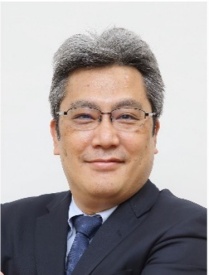
Shigenori Fujikawa
WPI Principal Investigator/Professor
International Institute for Carbon-Neutral Energy Research (WPI-I2CNER)
Kyushu University, Japan
- Time: 11:00 AM
- Location: 206 Furnas Hall